Against the backdrop of the country's vigorous promotion of new industrialization and green and low-carbon transformation, non-grain bio-based materials are emerging as a significant force driving the transformation of the new materials industry. Recently, the Ministry of Industry and Information Technology and the Ministry of Agriculture and Rural Affairs jointly announced the shortlist of typical cases for the innovative development of non-grain bio-based materials. In this strict nationwide selection, Shandong Yino Biomass Materials Co., Ltd., a subsidiary of Yino Group, and Henan Haosen Biomaterials Co., Ltd. were selected for their "Technology for Preparing Furan Compounds from Corn Cobs" and "Technology for Preparing Furan Compounds and Bio-based Pentanediol from Corn Cobs", respectively. This selection not only highly affirms the technological innovation capabilities and industrialization capabilities of the two enterprises but also reflects Yino Group's strategic layout in green and low-carbon new materials, serving the national strategy and empowering industrial upgrading.

Under the guidance of the "carbon peak and carbon neutrality" goals, the upgrading of China's industrial structure and the adjustment of its energy mix are accelerating. New materials, especially green, low-carbon and recyclable new materials, have become a key direction for fostering new productive forces. Among them, non-grain-based bio-based materials, due to their resource advantages of "not competing with food for grains and not competing with food for land" and their potential to replace traditional petrochemical materials, are increasingly attracting dual attention from policies and the market.
On the one hand, the problems of high energy consumption, high carbon emissions and difficult degradation in the production and use of traditional petrochemical-based materials have become increasingly prominent, forcing the industry to seek more green and sustainable alternatives. On the other hand, non-grain bio-based materials still face technical barriers and industrialization challenges in terms of stable large-scale supply, cost control and performance stability.
Against this backdrop, the one who can first form a systematic advantage in the utilization of non-grain raw materials, breakthroughs in key core technologies, and the expansion of downstream applications will be able to occupy the commanding heights in the new round of material revolution. The cases of Yino Bio and Henan Haosen that were selected precisely reflect this judgment logic: The non-grain bio-based route starting from corn cobs has already demonstrated feasibility and exemplary value at the industrial level.
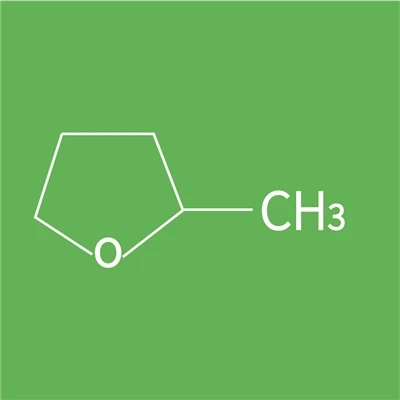
Both enterprises start with non-grain biomass corn cobs, but they cover a complete technological path that gradually extends from platform compounds to high-value-added products. Centering on the renewable resource of corn cobs, Yino Bio has established an independent technological system of "raw material pretreatment - furan platform compound synthesis - high-value product conversion". Through key innovations such as the development of new catalysts, it has achieved stable production of bio-based furan compounds such as 2-methyltetrahydrofuran, providing a reliable technological path for the large-scale preparation of bio-based chemicals. On this basis, Henan Haosen Bio has further advanced into the higher value-added range. Through systematic breakthroughs in key catalyst systems, continuous processes, and the combined utilization of cogeneration and energy, the enterprise has built a continuous industrial production line of bio-based 1,2-pentanediol and thereby constructed a "raw material - product - energy" integrated industrial chain structure. This marks that the non-grain bio-based route has moved from "technological feasibility" to a new stage where the industrial closed loop can operate independently.
This development precisely aligns with the ongoing changes in the downstream market. In the pharmaceutical, fine chemical, and high-end materials sectors, an increasing number of customers are incorporating the carbon attributes of raw materials into their decision-making systems. Their focus is no longer solely on whether the product performance meets standards, but also on whether the carbon source of the raw materials is clear, whether the life cycle emissions are calculable, and whether there are low-carbon alternatives that do not compromise performance. Bio-based solvents represented by 2-methyltetrahydrofuran are demonstrating their industrial value in this context of real-world demands - by maintaining performance advantages while significantly reducing the overall carbon footprint, they offer a practical and viable option for downstream enterprises in Scope 3 emissions reduction.
From a longer-term perspective, the significance of non-grain bio-based materials is not limited to "emission reduction" alone. It also connects the structural adjustment of the chemical industry's reliance on petroleum, the transformation of non-grain biomass waste from a disposal cost to an industrial resource, and the long-term demand of high-end manufacturing for stable and low-carbon raw materials. It is precisely for this reason that the true value of "typical cases" does not lie in the selection of the cases themselves, but in which technological paths have been proven to be worthy of continued investment and expansion.
Against the backdrop of the energy structure transformation and the continuous strengthening of carbon constraints, the non-grain biomass waste-based route, which starts from non-grain biomass waste and is supported by platformized processes to extend to diverse products, is becoming a feasible and long-term certain choice in the chemical industry. The inclusion of the relevant technologies of Yino Bio Group into the national-level typical case system is a microcosm of this trend gradually becoming clear.