Comprehensive Introduction
Delta-Valerolactone monomer (CAS 542-28-9) is a renewable, high-purity cyclic ester produced from non-food corncob biomass. With a molecular formula of C₅H₈O₂, this colorless to pale yellow transparent liquid functions as a versatile platform molecule and monomer for biodegradable and specialty polymers. Utilizing advanced biotechnology, delta-Valerolactone is produced to ≥99.5% purity, ensuring consistent performance in polymer synthesis.
This bio-derived monomer aligns with the principles of green chemistry, offering a safer and more sustainable alternative to fossil-based lactones. Its chemical structure enables ring-opening polymerization and copolymerization, making it suitable for a broad range of biodegradable material applications.
Product Details
| Product Name | δ-Valerolactone |
| CAS NO. | 542-28-9 |
| Key Words | delta-Valerolactone monomer, bio-based lactone monomer, corncob-derived δ-valerolactone, biodegradable monomer intermediate, sustainable polyester precursor |
| Molecular Formula | C5H8O2 |
| HS Number | 2932209090 |
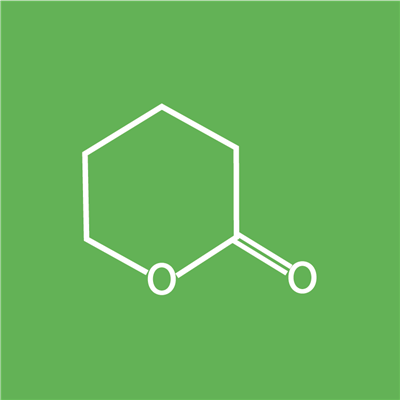
| Structural Formula |  |
Specification
|
Items |
Standard |
|
Appearance |
Colourless to light yellow clear liquid |
|
Source |
Corncob (non-edible biomass) |
|
Purity (%) |
≥99.5 |
|
Moisture (%) |
≤0.15 |
|
Acidity (mg KOH/g) |
≤0.2 |
|
Hazen Color Number |
20 |
|
Density (20℃, g/cm³) |
1.105 |
Usage & Core Function of Delta-Valerolactone Monomer
(Bio-Based Building Block for Polymer Development)
- Monomer for Biodegradable Polymers
Delta-Valerolactone monomer is used in ring-opening polymerization to produce poly(δ-valerolactone) (PVL), a biodegradable and biocompatible polyester. PVL and its copolymers are employed in medical devices, tissue engineering scaffolds, and controlled-release drug delivery systems due to their flexibility and safe degradation profile.
- Co-Monomer for Copolyesters and Polyurethanes
It is also widely used as a co-monomer in the production of soft-segment polyurethanes and polyesters, enhancing elasticity, toughness, and low-temperature performance in elastomeric applications.
- Advanced Functional Polymers
The monomer is suitable for functionalization, enabling the creation of reactive polymer chains for specialty applications such as adhesives, thermoplastics, and bio-based thermoset materials.
- Bio-Compatible Medical Polymers
Thanks to its purity and low toxicity, delta-Valerolactone is considered safe for biomedical applications, including biodegradable implants and surgical sutures.
Production Capacity

Full-Cycle Safety Certifications

Recommended Applications
- Ring-opening polymerization (ROP) for biodegradable polyesters
- Co-monomer in soft thermoplastic polyurethanes (TPUs)
- Medical-grade polymer synthesis
- Functional polymer intermediates for adhesives and coatings
- Controlled-release pharmaceutical carriers
- Bio-based alternatives to petrochemical monomers
Comparison: Delta-Valerolactone Monomer vs. Traditional Monomers
|
Parameter |
Our Bio Product |
Petrochemical-Based Monomers |
|
Feedstock |
100% Corncob Biomass |
Crude Oil-Based |
|
Polymerization Type |
Ring-opening / Copolymer |
Mainly fossil-based acrylates |
|
Purity (%) |
≥99.5 |
95–98 |
|
Biodegradability |
Fully Biodegradable |
Low / Non-biodegradable |
|
Toxicity |
Low / Biocompatible |
Moderate to High |
|
Sustainability |
Renewable & Eco-Friendly |
Non-renewable, carbon-intensive |
Packing
Delta-Valerolactone monomer is available in 200kg drums and ISO tank containers. Custom packaging options can be arranged based on specific industry and shipping needs to ensure product integrity and safe transportation.

Facilitating customer procurement based on actual needs.
FAQ
Q: What is the primary use of delta-Valerolactone monomer?
A: It serves as a key monomer in the production of biodegradable polyesters and copolymers used in medical, packaging, and industrial applications.
Q: How is it different from petrochemical monomers?
A: It is bio-based, biodegradable, non-toxic, and produced from renewable corncob biomass, making it a safer and more sustainable choice.
Q: Is delta-Valerolactone suitable for medical applications?
A: Yes, its high purity and low toxicity make it ideal for use in biomedical polymers like sutures, implants, and drug delivery carriers.
Q: Can it be used in polyurethane production?
A: Absolutely. As a soft segment co-monomer, it enhances flexibility and biodegradability in bio-based TPU formulations.
Q: How is the product stored and handled?
A: It should be stored in sealed containers away from heat and sunlight. We offer packaging in drums or tanks suitable for long-distance and bulk shipments.
Conclusion
Delta-Valerolactone monomer offers a powerful combination of performance and sustainability for the modern polymer industry. Produced from renewable corncob biomass, it enables the synthesis of biodegradable, bio-compatible, and high-functionality polymers. Whether used in medical devices, sustainable plastics, or high-performance materials, this monomer is paving the way for greener polymer innovation on a global scale.
Specification
|
Items |
Standard |
|
Appearance |
Colourless to light yellow clear liquid |
|
Source |
Corncob (non-edible biomass) |
|
Purity (%) |
≥99.5 |
|
Moisture (%) |
≤0.15 |
|
Acidity (mg KOH/g) |
≤0.2 |
|
Hazen Color Number |
20 |
|
Density (20℃, g/cm³) |
1.105 |
Hot Tags: delta-valerolactone monomer, China delta-valerolactone monomer manufacturers, suppliers, factory, Delta valerolactone CAS 542 28 9, bio delta valerolactone, Delta Valerolactone Monomer, Delta valerolactone Green Solvent