

Hey there! As a supplier of Delta - Valerolactone Monomer, I often get asked a bunch of questions about this nifty little chemical. One question that pops up quite a bit is, "Can Delta - Valerolactone Monomer react with acids?" Let's dive right into it and find out.
First off, let's get a bit of background on Delta - Valerolactone Monomer. It's a chemical compound with some pretty interesting properties. You can learn more about it here: Delta - Valerolactone Monomer. It's used in various industries, from the production of polymers to being a Delta - valerolactone Green Solvent. It's also known by its CAS number 542 - 28 - 9. Check out Delta - valerolactone CAS 542 - 28 - 9 for more detailed info.
Now, back to the main question. Can it react with acids? Well, the short answer is yes, it can. But like most chemical reactions, it's not that simple. The reaction depends on a few factors, such as the type of acid, the reaction conditions (temperature, pressure, etc.), and the concentration of the reactants.
Let's start with the type of acid. There are two main types of acids: strong acids and weak acids. Strong acids, like hydrochloric acid (HCl) or sulfuric acid (H₂SO₄), are more likely to react with Delta - Valerolactone Monomer compared to weak acids, such as acetic acid (CH₃COOH).
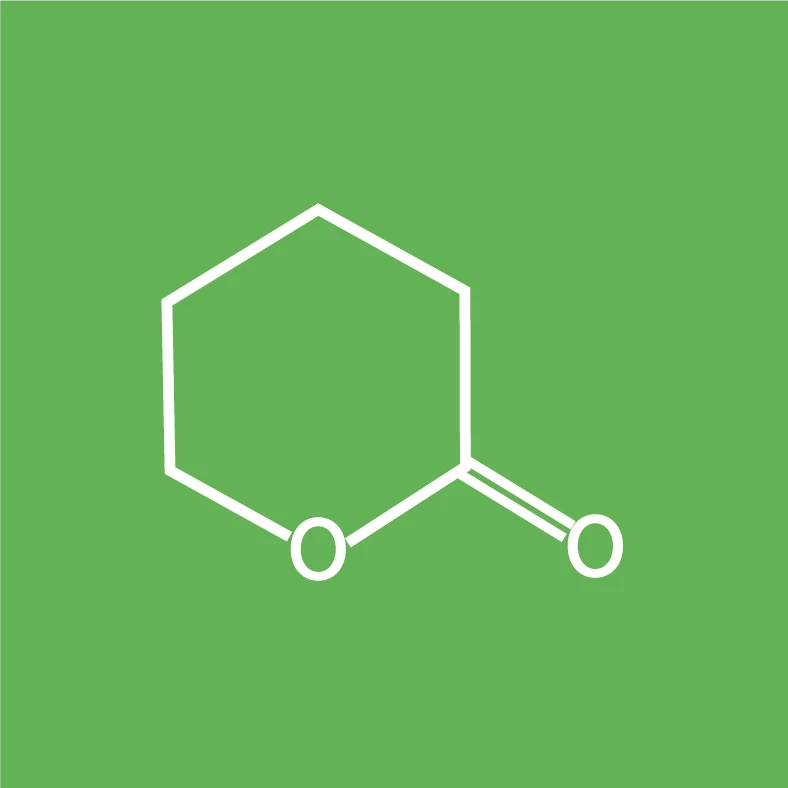
When Delta - Valerolactone Monomer reacts with a strong acid, the acid can act as a catalyst to open the lactone ring. The lactone ring in Delta - Valerolactone Monomer is a cyclic structure, and when it opens, it forms a linear molecule with a carboxylic acid group at one end and an alcohol group at the other. This reaction is called ring - opening hydrolysis.
For example, if we take hydrochloric acid and Delta - Valerolactone Monomer, the H⁺ ions from the acid can protonate the oxygen atom in the lactone ring. This makes the ring more susceptible to attack by water molecules. The water molecules then break the bond in the ring, resulting in the formation of a hydroxycarboxylic acid.
The reaction conditions also play a crucial role. Higher temperatures generally speed up chemical reactions. So, if you increase the temperature of the reaction between Delta - Valerolactone Monomer and an acid, the reaction will occur faster. However, you have to be careful not to go too high, as excessive heat can cause side reactions or even decompose the reactants.
Pressure can also have an effect, although it's not as significant as temperature in most cases. In some industrial processes, increasing the pressure can help to increase the solubility of the reactants and improve the reaction rate.
The concentration of the reactants is another important factor. If you have a higher concentration of acid, the reaction will proceed more quickly because there are more acid molecules available to react with the Delta - Valerolactone Monomer. But again, you have to find the right balance. Too high a concentration of acid can lead to unwanted side reactions or make the reaction too difficult to control.
Now, let's talk about the practical applications of this reaction. The ring - opening hydrolysis of Delta - Valerolactone Monomer can be used to produce various polymers. The resulting hydroxycarboxylic acid can undergo further reactions, such as condensation polymerization, to form polyesters. These polyesters have a wide range of applications, from packaging materials to biomedical devices.
In the polymer industry, the ability to control the reaction between Delta - Valerolactone Monomer and acids is crucial. By adjusting the reaction conditions and the type of acid used, manufacturers can produce polymers with different properties, such as molecular weight, melting point, and solubility.
Another application is in the synthesis of fine chemicals. The hydroxycarboxylic acid produced from the reaction can be used as a starting material for the synthesis of other compounds. For example, it can be used to make pharmaceutical intermediates or flavoring agents.
So, as you can see, the reaction between Delta - Valerolactone Monomer and acids is not only possible but also has some important practical applications. If you're in an industry that could benefit from these reactions, or if you're just curious about Delta - Valerolactone Monomer, we're here to help.
We're a reliable supplier of Delta - Valerolactone Monomer, and we can provide you with high - quality products at competitive prices. Whether you need a small sample for research purposes or a large quantity for industrial production, we've got you covered.

If you're interested in learning more about our products or have any questions about the reaction between Delta - Valerolactone Monomer and acids, don't hesitate to reach out. We're always happy to have a chat and discuss your specific needs. You can contact us to start a procurement discussion and see how we can work together to meet your requirements.
In conclusion, Delta - Valerolactone Monomer can react with acids under the right conditions, and this reaction has some exciting potential in various industries. So, if you're looking for a supplier of this versatile chemical, give us a shout.
References:
- March, J. Advanced Organic Chemistry: Reactions, Mechanisms, and Structure. Wiley, 2007.
- Morrison, R. T., & Boyd, R. N. Organic Chemistry. Prentice Hall, 1992.


