

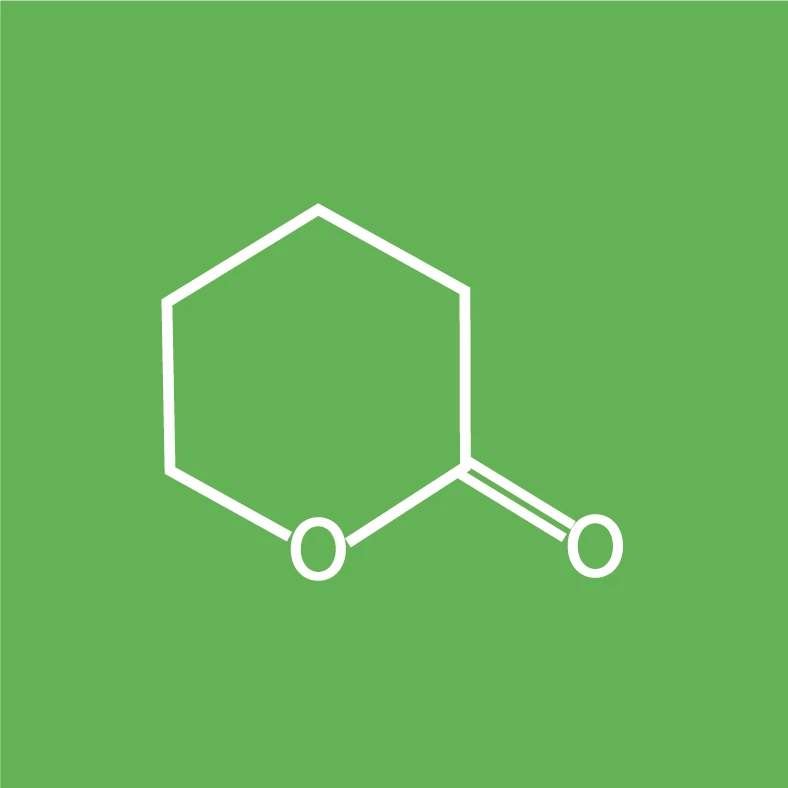
Delta - valerolactone (DVL) monomer is a versatile chemical compound that has found applications in various industries, including the production of polymers, solvents, and as an intermediate in organic synthesis. As a supplier of Delta - Valerolactone Monomer, I often encounter questions from customers regarding its reactivity with metals. In this blog post, I will explore the potential reactions between Delta - Valerolactone Monomer and metals, based on scientific knowledge and research.
Chemical Properties of Delta - Valerolactone Monomer
Delta - Valerolactone Monomer, with the Delta - valerolactone CAS 542 - 28 - 9, is a cyclic ester with a five - membered ring structure. It has a relatively stable structure under normal conditions, but its reactivity can be influenced by factors such as temperature, pH, and the presence of catalysts. The carbonyl group in the lactone ring is a reactive site that can potentially interact with other chemical species, including metals.
General Reactivity of Esters with Metals
Esters, in general, can react with metals in different ways. Some of the common reactions include reduction, hydrolysis, and complex formation. For example, in the presence of strong reducing agents such as lithium aluminum hydride (LiAlH₄), esters can be reduced to alcohols. However, these reactions usually require specific reaction conditions and reagents.
When it comes to the interaction between esters and metals without strong reducing agents, the reactivity is often more limited. Metals can act as Lewis acids, accepting electron pairs from the carbonyl oxygen of the ester. This interaction can lead to the formation of coordination complexes, which may or may not result in a chemical transformation of the ester.
Reactivity of Delta - Valerolactone Monomer with Metals
1. Oxidizing Metals
Metals such as copper, iron, and aluminum are relatively common and can be found in various industrial settings. In the case of copper, under normal conditions, Delta - Valerolactone Monomer is unlikely to react with it directly. Copper is a moderately reactive metal, and the carbonyl group of Delta - Valerolactone Monomer is not a strong enough reducing agent to cause oxidation of copper. However, in the presence of moisture and oxygen, copper can form a thin layer of copper oxide on its surface. The copper oxide may interact with the lactone ring, but the reaction is expected to be very slow and may not lead to significant degradation of the monomer.
Iron is more reactive than copper. In the presence of oxygen and moisture, iron can rust. The rust (iron oxide) may interact with Delta - Valerolactone Monomer, but similar to copper, the reaction rate is likely to be low. The carbonyl group of the lactone may form a weak complex with the iron ions in the rust, but this is more of a physical - chemical interaction rather than a chemical reaction that breaks the lactone ring.
Aluminum is a highly reactive metal, but it forms a protective oxide layer on its surface when exposed to air. This oxide layer prevents further reaction with many chemicals, including Delta - Valerolactone Monomer. Under normal conditions, Delta - Valerolactone Monomer is stable in contact with aluminum. However, if the aluminum surface is scratched or the oxide layer is removed, the bare aluminum may react with the lactone under certain conditions.
2. Noble Metals
Noble metals such as gold, silver, and platinum are known for their low reactivity. Delta - Valerolactone Monomer is not expected to react with these metals under normal conditions. The carbonyl group of the lactone is not reactive enough to cause oxidation or reduction of noble metals. The interaction between the lactone and noble metals is likely to be limited to weak van der Waals forces or very weak coordination interactions.
3. Alkali and Alkaline Earth Metals
Alkali metals (such as sodium and potassium) and alkaline earth metals (such as magnesium and calcium) are highly reactive. These metals can react violently with water, and in the presence of Delta - Valerolactone Monomer, they are likely to react with any trace of water present in the system. If the reaction conditions are carefully controlled to exclude water, the alkali and alkaline earth metals may react with the lactone ring. For example, sodium can act as a strong reducing agent and may break the lactone ring, leading to the formation of an alkoxide and other reaction products. However, these reactions require very specific and controlled conditions.
Influence of Reaction Conditions
The reactivity of Delta - Valerolactone Monomer with metals can be significantly influenced by reaction conditions. For example, at high temperatures, the kinetic energy of the molecules increases, which can enhance the probability of a reaction occurring. Additionally, the presence of catalysts can lower the activation energy of the reaction, making it more likely to take place.
In an acidic or basic environment, the reactivity of the lactone ring can also change. In acidic conditions, the carbonyl group of the lactone can be protonated, increasing its electrophilicity and potentially enhancing its reactivity with metals. In basic conditions, the lactone can undergo hydrolysis, which may then affect its interaction with metals.
Applications and Considerations in Industrial Use
Delta - Valerolactone Monomer is used in various industrial applications, such as the production of biodegradable polymers. When using Delta - Valerolactone Monomer in contact with metal equipment or containers, it is important to consider its potential reactivity with metals. In most cases, under normal operating conditions, the interaction between Delta - Valerolactone Monomer and metals is minimal. However, if the reaction conditions are extreme or if there are contaminants present, there may be a risk of reaction.
For example, in a polymerization process where Delta - Valerolactone Monomer is used, the choice of metal reactors or catalysts can be crucial. If a metal catalyst is used, it is important to ensure that it does not cause unwanted side reactions with the monomer. Similarly, when storing Delta - Valerolactone Monomer in metal containers, the type of metal and the storage conditions should be carefully selected to prevent any potential degradation of the monomer.
Conclusion
In conclusion, the reactivity of Delta - Valerolactone Monomer with metals is complex and depends on various factors such as the type of metal, reaction conditions, and the presence of other chemical species. Under normal conditions, Delta - Valerolactone Monomer is relatively stable in contact with most common metals. However, in extreme conditions or in the presence of highly reactive metals, there is a potential for chemical reactions to occur.
As a supplier of Delta - Valerolactone Monomer, we understand the importance of providing high - quality products and relevant technical information to our customers. If you have any questions about the reactivity of Delta - Valerolactone Monomer with metals or its applications in your specific industry, please feel free to contact us for further discussion and procurement. We are committed to helping you find the best solutions for your needs.
References
- March, J. (1992). Advanced Organic Chemistry: Reactions, Mechanisms, and Structure. John Wiley & Sons.
- Carey, F. A., & Sundberg, R. J. (2007). Advanced Organic Chemistry Part A: Structure and Mechanisms. Springer.
- House, H. O. (1972). Modern Synthetic Reactions. W. A. Benjamin, Inc.


