

Hey there! As a supplier of Furfural Biomass, I'm super excited to take you through the fascinating process of how furfural is produced from biomass. It's a topic that combines science, sustainability, and a bit of industrial know - how. So, let's dive right in!
What is Furfural?
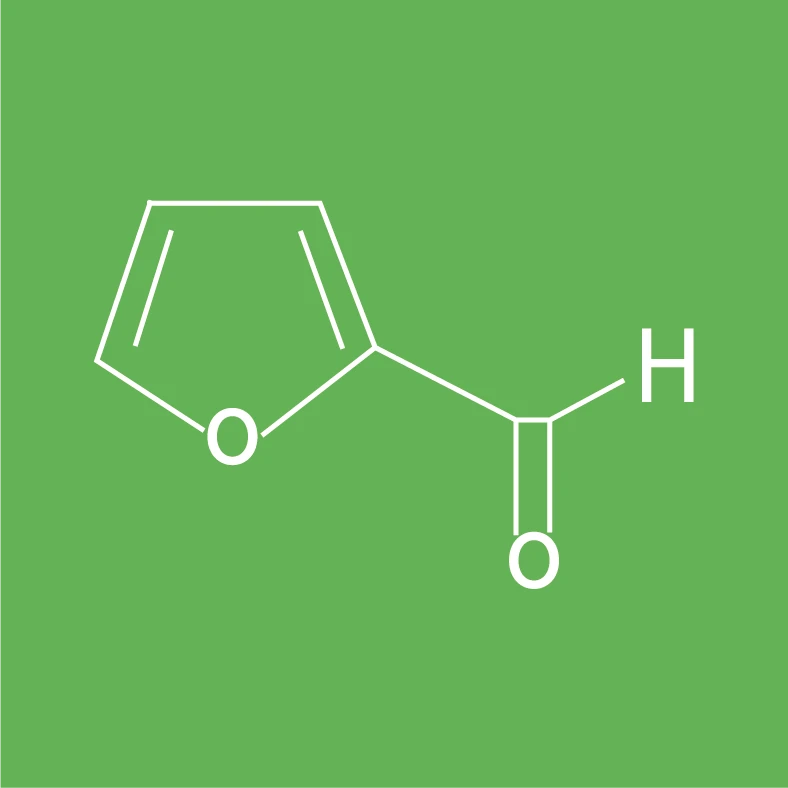
Before we get into the production process, let's quickly talk about what furfural is. Furfural is an organic compound that's derived from a variety of agricultural by - products. It's got some pretty important applications. You can find it in the production of plastics, pharmaceuticals, and even as a flavoring agent. Check out Food Grade Furfural if you're interested in its use in the food industry. And for more technical details, Furfural CAS 98 - 01 - 1 gives you all the chemical info.
Biomass: The Starting Point
Biomass is basically any organic material that comes from plants or animals. For furfural production, we mainly use agricultural waste like corn cobs, sugarcane bagasse, and wheat straw. These are great because they're renewable and usually just sitting around after the main crop has been harvested. Using them to make furfural is a win - win for the environment and the economy.
Step 1: Pretreatment
The very first step in making furfural from biomass is pretreatment. Biomass is made up of a bunch of complex polymers like cellulose, hemicellulose, and lignin. Our goal here is to break down the hemicellulose, which contains the pentosan (a type of sugar) that we'll turn into furfural later.
There are a few ways to do the pretreatment. One common method is using an acid catalyst. Dilute sulfuric acid is often used because it's relatively cheap and effective. We mix the biomass with the acid solution and heat it up. The acid helps to hydrolyze the hemicellulose into its component sugars, mainly xylose.
Another approach is using steam explosion. In this method, we expose the biomass to high - pressure steam for a short period and then suddenly release the pressure. This causes the biomass to explode, breaking down the structure and making the hemicellulose more accessible for further processing.
Step 2: Hydrolysis
Once the biomass has been pretreated, we move on to hydrolysis. This is where the pentosans in the hemicellulose are converted into pentose sugars, especially xylose. The hydrolysis reaction can happen under different conditions, depending on the pretreatment method used.
If we used acid pretreatment, the acid continues to act as a catalyst during hydrolysis. We heat the mixture of pretreated biomass and acid to a specific temperature, usually around 140 - 200°C. The heat and acid work together to break the chemical bonds in the pentosans, releasing the pentose sugars into the solution.
The reaction rate and yield of pentose sugars depend on several factors, like the type and concentration of the acid, the temperature, and the reaction time. We have to carefully control these parameters to get the best results.
Step 3: Dehydration
After hydrolysis, we have a solution full of pentose sugars. Now, it's time to turn these sugars into furfural through a process called dehydration. This is a crucial step in the production of furfural.
Dehydration involves removing water molecules from the pentose sugars. Again, an acid catalyst is used, and we heat the solution to a higher temperature, typically around 180 - 220°C. The acid helps to speed up the reaction, and the heat provides the energy needed to break the chemical bonds and remove the water.
The reaction is a bit complex, but in simple terms, the xylose (a pentose sugar) loses three molecules of water to form furfural. The chemical equation looks something like this: C₅H₁₀O₅ (xylose) → C₅H₄O₂ (furfural)+ 3H₂O
Step 4: Separation and Purification
Once the furfural is formed, we need to separate it from the rest of the reaction mixture. The mixture contains not only furfural but also unreacted sugars, acids, and other by - products.
One common separation method is distillation. Furfural has a different boiling point compared to the other components in the mixture. By heating the mixture to the boiling point of furfural, we can vaporize it and then condense the vapor back into a liquid. This gives us a relatively pure sample of furfural.
After distillation, we may need to do some further purification steps. For example, we can use activated carbon to adsorb any remaining impurities or use a solvent extraction method to remove specific contaminants. The final product is a high - quality furfural that can be used in various industries. Check out Furfural Chemical for more details on the properties and uses of the purified furfural.
Why Choose Our Furfural Biomass?
As a supplier, we take pride in providing the best quality biomass for furfural production. Our biomass comes from reliable sources, and we ensure that it's properly processed and stored to maintain its quality.
We understand the importance of sustainability, and that's why we focus on using agricultural waste. By doing so, we're not only reducing waste but also contributing to a more circular economy. Our production process is also optimized to get the highest yield of furfural, which means better value for our customers.
Let's Talk Business!
If you're in the market for furfural or furfural biomass, I'd love to have a chat with you. Whether you're a small - scale manufacturer or a large industrial player, we can work together to meet your needs. We offer competitive prices, high - quality products, and excellent customer service. So, don't hesitate to reach out and start a conversation about your furfural requirements.

References
- Smith, J. (2020). Biomass - based Chemicals: Furfural Production. Journal of Sustainable Chemistry and Engineering.
- Brown, A. (2019). Advances in Furfural Production from Agricultural Residues. Chemical Engineering Reviews.
- Green, C. (2021). The Role of Acid Catalysts in Furfural Synthesis. Organic Process Research & Development.


