

Furfural is a fascinating and versatile chemical compound with a wide range of applications in various industries, including pharmaceuticals, agriculture, and food. As a leading furfural supplier, we understand the importance of high-quality separation techniques to ensure the purity and effectiveness of this valuable chemical. This blog post will explore suitable separation techniques for furfural and how they contribute to the production of top-notch furfural products.
Understanding Furfural and Its Significance
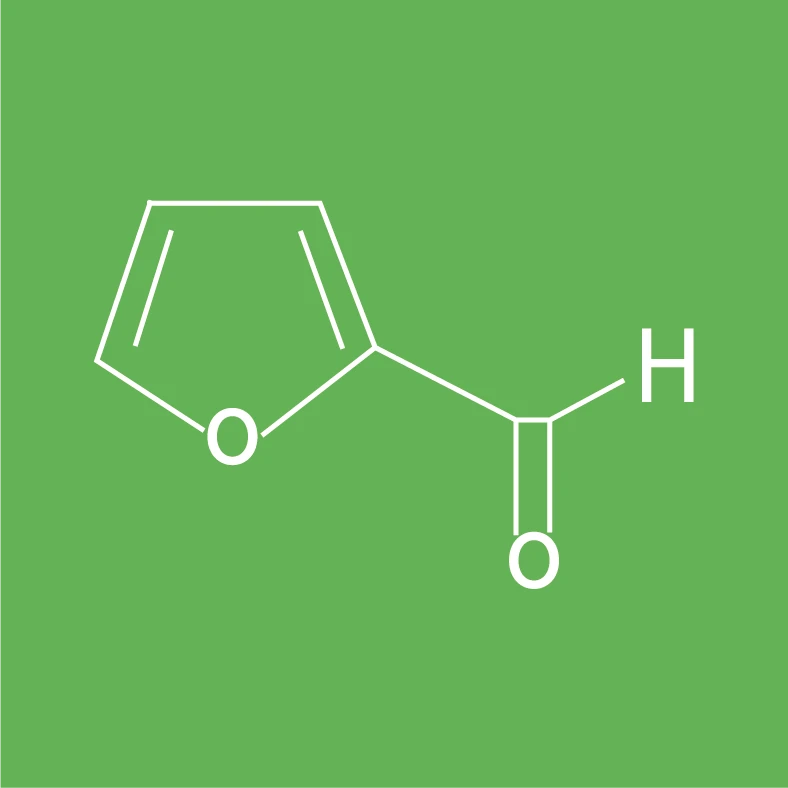
Furfural is an organic compound derived from various agricultural residues such as corn cobs, sugarcane bagasse, and oat hulls. It is a colorless to yellowish liquid with a characteristic almond - like odor. Furfural has a unique chemical structure that makes it a valuable building block for synthesizing other chemicals, including solvents, plastics, and pharmaceuticals.
The demand for furfural has been steadily increasing due to its eco - friendly nature and the growing preference for bio - based chemicals. For instance, Furfural Chemical is widely used in the chemical industry for the production of furan derivatives, which are essential in the manufacturing of high - performance polymers. In the food industry, Food Grade Furfural is used as a flavoring agent, adding a desirable nutty and caramel flavor to various food products. Moreover, Furfural Preservative has antimicrobial properties, making it an effective natural preservative in the agricultural and food sectors.
Importance of Separation Techniques in Furfural Production
The initial extraction of furfural from biomass involves a hydrolysis process, where hemicellulose in the biomass is broken down into pentoses, which are then dehydrated to form furfural. However, the resulting mixture contains not only furfural but also other by - products, unreacted substances, and impurities. Separation techniques are crucial for isolating pure furfural from this complex mixture, ensuring that the final product meets the required quality standards.
Purification of furfural is essential for several reasons. First, high - purity furfural is necessary for applications in the pharmaceutical and food industries, where even trace amounts of impurities can have adverse effects. Second, removing impurities can enhance the efficiency and performance of furfural in chemical reactions, leading to better - quality end - products. Additionally, proper separation techniques can improve the overall yield of furfural production, making the process more economically viable.
Suitable Separation Techniques for Furfural
Distillation
Distillation is one of the most commonly used separation techniques for furfural. It is based on the principle of differences in boiling points between furfural and other components in the mixture. Furfural has a boiling point of approximately 161.7 °C at atmospheric pressure.
In simple distillation, the mixture is heated to vaporize the components. The vapor is then condensed and collected. This method is suitable when there is a significant difference in boiling points between furfural and the other substances in the mixture. However, in most cases, fractional distillation is preferred. Fractional distillation uses a fractionating column, which provides multiple stages of vaporization and condensation. This allows for a more precise separation of components with similar boiling points, resulting in a higher - purity furfural product.
The advantages of distillation include its simplicity, scalability, and wide availability of equipment. It is a well - established technique that can be easily integrated into large - scale furfural production plants. However, distillation can be energy - intensive, especially when dealing with mixtures with close - boiling components.
Solvent Extraction
Solvent extraction is another effective separation technique for furfural. It involves the use of a suitable solvent to selectively dissolve furfural from the mixture. The choice of solvent is crucial and depends on factors such as the solubility of furfural in the solvent, the solubility of other components in the mixture, and the ease of separating the solvent from furfural after extraction.
Common solvents used for furfural extraction include organic solvents such as diethyl ether, ethyl acetate, and dichloromethane. These solvents have good solubility for furfural and can effectively separate it from the aqueous phase. The extraction process typically involves mixing the two immiscible phases (the aqueous mixture containing furfural and the organic solvent) in a separation funnel or an extraction column. After thorough mixing, the phases are allowed to separate. The organic phase, which contains the extracted furfural, is then separated from the aqueous phase.
The advantage of solvent extraction is its high selectivity, which allows for efficient separation of furfural even from complex mixtures. It can also operate at relatively low temperatures, reducing the risk of thermal degradation of furfural. However, the use of organic solvents may pose environmental and safety concerns, and additional steps are required to recover and recycle the solvent.
Adsorption
Adsorption is a separation technique that utilizes the surface properties of adsorbents to selectively adsorb furfural from the mixture. Adsorbents such as activated carbon, zeolites, and silica gel have large surface areas and can selectively adsorb furfural molecules based on their size, shape, and chemical properties.
In the adsorption process, the mixture containing furfural is passed through a column packed with the adsorbent. Furfural molecules are adsorbed onto the surface of the adsorbent, while other components pass through the column. The adsorbed furfural can then be desorbed from the adsorbent using a suitable desorbent, such as steam or a solvent.
Adsorption has several advantages. It can be highly selective, allowing for the separation of furfural from mixtures containing other substances that have similar physical properties. It also offers the possibility of continuous operation and can be easily integrated into existing production processes. However, the capacity of the adsorbent is limited, and regeneration of the adsorbent may be required periodically, which can add to the cost of the process.
Membrane Separation
Membrane separation is a modern and promising technique for furfural separation. It uses semi - permeable membranes to separate furfural from the mixture based on differences in molecular size, shape, and solubility. Membranes can be classified into different types, such as reverse osmosis, nanofiltration, ultrafiltration, and microfiltration, depending on their pore size and separation mechanism.
For furfural separation, nanofiltration and reverse osmosis membranes are often used. These membranes have small pore sizes that can selectively reject the passage of larger molecules while allowing furfural molecules to pass through. The separation process is driven by a pressure difference across the membrane.
The advantages of membrane separation include its energy efficiency, low operating temperature, and the ability to operate continuously. It also does not require the use of solvents, which reduces environmental impact. However, membrane fouling is a major challenge in membrane separation processes, which can reduce the membrane's performance and lifespan.

Impact of Separation Techniques on Furfural Quality and Applications
The choice of separation technique has a significant impact on the quality of furfural. High - quality separation techniques can produce furfural with a high degree of purity, which is essential for applications in sensitive industries such as pharmaceuticals and food. For example, in the pharmaceutical industry, pure furfural is required for the synthesis of drugs, where impurities can affect the efficacy and safety of the final product.
In the food industry, Food Grade Furfural must meet strict quality standards. The use of appropriate separation techniques ensures that the furfural is free from contaminants and has the desired flavor profile. Similarly, in the chemical industry, high - purity furfural is necessary for the production of high - performance polymers and other chemical derivatives.
Conclusion
As a furfural supplier, we recognize the critical role of separation techniques in producing high - quality furfural products. Distillation, solvent extraction, adsorption, and membrane separation are all suitable techniques, each with its own advantages and limitations. By carefully selecting and optimizing the separation process, we can ensure that our furfural products meet the diverse needs of our customers in various industries.
If you are in the market for high - quality furfural, we invite you to contact us for procurement discussions. Our team of experts is ready to provide you with detailed information about our products and help you find the best furfural solution for your specific requirements.
References
- Smith, J. K. (2018). Chemical Engineering Principles for Furfural Production. Wiley - VCH.
- Jones, A. B. (2020). Separation Techniques in the Bio - based Chemical Industry. Springer.
- Brown, C. D. (2019). Advances in Furfural Separation and Purification. Journal of Chemical Separation Science, 45(2), 123 - 135.


