

Hey there! As a supplier of High Purity Furfuryl Alcohol, I've been getting a lot of questions lately about how this nifty chemical affects the flexibility of materials. So, I thought I'd sit down and share some insights on this topic.
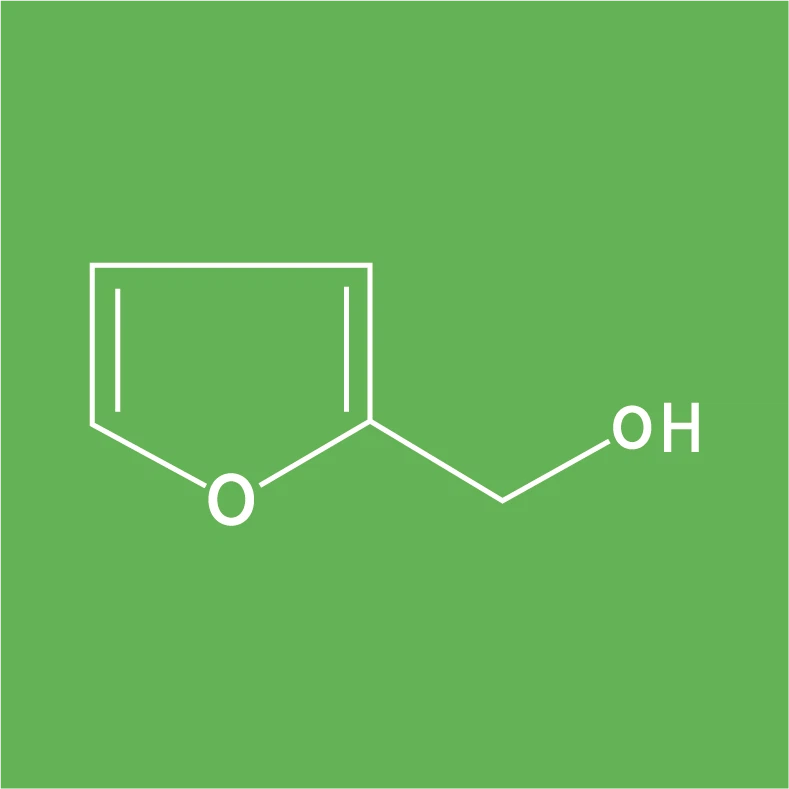
First off, let's talk a bit about what High Purity Furfuryl Alcohol is. It's a clear, colorless to slightly yellowish liquid with a characteristic odor. You can find more detailed info about it on our High Purity Furfuryl Alcohol page. This chemical is widely used in various industries, especially as a Furan Resin Raw Material. It's also known as a Green Chemical Furfuryl Alcohol due to its relatively eco - friendly nature compared to some other chemicals.
Now, onto the main question: What are the effects of High Purity Furfuryl Alcohol on the flexibility of materials?
Impact on Polymer - based materials
Polymers are everywhere, from the plastic containers we use daily to the synthetic fibers in our clothes. When High Purity Furfuryl Alcohol is introduced into polymer systems, it can have some interesting effects on flexibility.
In many cases, furfuryl alcohol acts as a plasticizer. A plasticizer is a substance that's added to a polymer to increase its flexibility, workability, or stretchability. When it's mixed with polymers, it inserts itself between the polymer chains. This separation of the chains reduces the intermolecular forces between them. As a result, the polymer becomes more flexible and easier to shape.
For example, in the production of certain types of rubber - like polymers, adding High Purity Furfuryl Alcohol can enhance the material's ability to bend and stretch without breaking. This is super useful in applications where the material needs to conform to different shapes or withstand repeated deformation, such as in gaskets or seals.
However, it's not all straightforward. The amount of furfuryl alcohol added matters a great deal. If too much is used, it can cause the polymer to become overly soft and lose its structural integrity. On the other hand, if too little is added, the desired increase in flexibility may not be achieved. So, finding the right balance is crucial.
Effects on composite materials
Composite materials are made by combining two or more different materials to get the best properties of each. High Purity Furfuryl Alcohol can play an important role in enhancing the flexibility of these composites.
In fiber - reinforced composites, where fibers like glass or carbon are embedded in a polymer matrix, furfuryl alcohol can improve the interface between the fibers and the matrix. A good interface allows for better stress transfer between the components of the composite. When the composite is bent or stretched, the stress is more evenly distributed, which helps prevent premature failure and makes the material more flexible.

For instance, in some construction applications, composite materials with furfuryl alcohol - enhanced matrices can be used in structural elements that need to withstand some degree of flexing, like in earthquake - resistant buildings. The improved flexibility can help the structure absorb and dissipate the energy from seismic activity, reducing the risk of damage.
Influence on adhesives
Adhesives are used to bond different materials together. High Purity Furfuryl Alcohol can have a significant impact on the flexibility of adhesives.
When added to adhesive formulations, it can modify the curing process. A more flexible adhesive can adapt to the movements of the bonded materials. For example, in automotive applications, where parts are subject to vibrations and temperature changes, a flexible adhesive is essential. Adhesives with furfuryl alcohol can better withstand these conditions without cracking or losing their bonding strength.
The furfuryl alcohol also affects the rheological properties of the adhesive. It can make the adhesive more viscous during application, which is important for proper spreading and bonding. Once cured, the adhesive retains a certain level of flexibility that allows it to accommodate the dynamic nature of the bonded parts.
Considerations for different industries
Construction industry
In construction, flexibility in materials can mean the difference between a structure that lasts and one that fails. High Purity Furfuryl Alcohol - treated materials can be used in various construction components. For example, in roofing materials, a more flexible material can better adapt to the expansion and contraction caused by temperature changes. This helps prevent cracks and leaks, which are a major headache for building owners.
Automotive industry
As mentioned before, the automotive sector benefits greatly from the flexibility - enhancing properties of High Purity Furfuryl Alcohol. From interior components to under - the - hood parts, flexible materials can improve the performance and durability of vehicles. For example, flexible gaskets and seals can prevent fluid leaks and reduce noise and vibration, providing a more comfortable driving experience.
Aerospace industry
In aerospace, materials need to be lightweight yet strong and flexible. High Purity Furfuryl Alcohol can be used to develop composites with the right balance of these properties. Flexible composites can be used in aircraft wings and other structural parts, helping the aircraft withstand the aerodynamic forces during flight.
Challenges and limitations
While High Purity Furfuryl Alcohol offers many benefits in terms of increasing material flexibility, there are also some challenges.
One of the main issues is its reactivity. Furfuryl alcohol can react with other chemicals in the material system, especially in the presence of catalysts or under certain environmental conditions. This reaction can sometimes lead to unwanted side - products or changes in the material's properties over time.
Another limitation is related to its volatility. At high temperatures, some of the furfuryl alcohol may evaporate from the material. This can lead to a decrease in flexibility as the plasticizing effect is lost. So, careful consideration of processing and usage conditions is necessary.
Conclusion
In conclusion, High Purity Furfuryl Alcohol has a wide range of effects on the flexibility of materials. Whether it's polymers, composites, or adhesives, it can significantly enhance the ability of these materials to bend, stretch, and adapt to different conditions. However, using it effectively requires a good understanding of the material system, the right dosage, and proper processing conditions.
If you're in an industry that could benefit from the flexibility - enhancing properties of High Purity Furfuryl Alcohol, I encourage you to reach out to have a chat about your specific needs. We can work together to find the best solutions for your applications.
References
- "Furfuryl Alcohol: Properties and Applications" - Chemical Industry Journal
- "Flexibility Enhancement in Polymer Materials" - Polymer Science Review
- "Composite Materials and the Role of Additives" - Composite Engineering Magazine


